Middle East & Africa | Awkward neighbours
Why Syria and Iraq cannot reconcile
Iraqis still find it hard to forgive the Syrian leader’s jihadist past
February 12th 2026
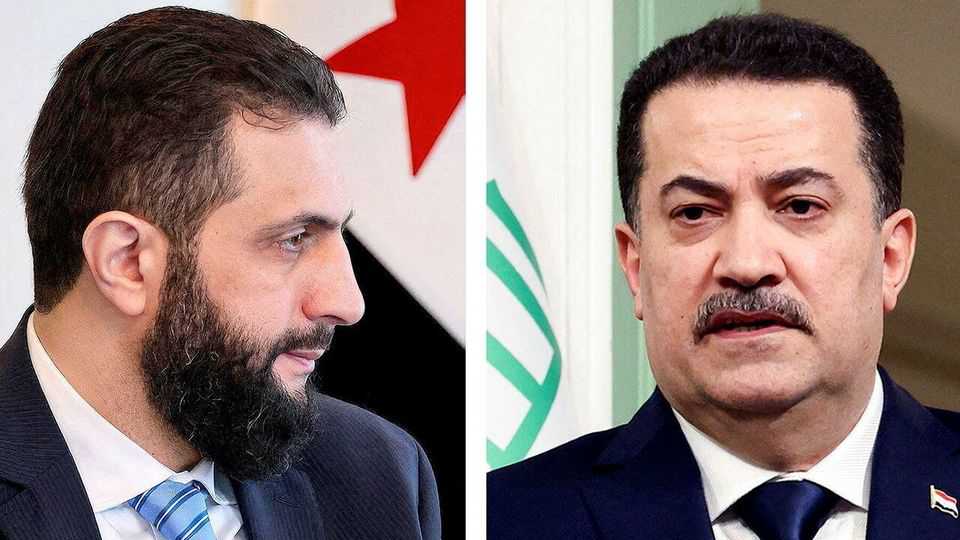
Ahmed al-sharaa’s international charm offensive has been impressive. Syria’s interim president has basked in applause at the United Nations and held court in private members’ clubs in New York. In May he was warmly welcomed to Paris by France’s president. A closer neighbour, however, remains unswayed.
In another age, Iraq and Syria might have been natural allies: twin nations astride the Euphrates, blessed with diverse populations and historic cities. In practice, the relationship has been poisonous for decades. The Baath party, socialist and Arab nationalist, might have bridged the division. Instead it deepened it. By the 1970s, rival Baathist regimes ruled in Damascus and Baghdad. Hafez al-Assad, then Syria’s president, dismissed Saddam Hussein and his allies in Iraq as a “gang”. Saddam accused Syria of treachery. After America invaded Iraq in 2003, Bashar al-Assad sent busloads of jihadists from his prisons into Iraq, hoping to bog America down in a 21st-century Vietnam.
Mr Sharaa makes such history hard to forget. He once waged jihad against American occupiers in Iraq and spent five years in Iraqi prisons. In Shia-majority Iraq, where Iran, the Middle East’s leading Shia power, holds great sway, his decision to join the jihadists is not easily forgiven.
The rise of Islamic State (is), which was Sunni, in 2014 prompted the growth of Iran-backed militias in Iraq. Over a decade later, many of these sectarian armed groups remain deeply embedded in the Iraqi state, still implacably opposed to the Sunni militants who helped Mr Sharaa topple Mr Assad in December 2024. Syrians, for their part, remember that those militias fought beside the Syrian dictator.
In recent years, Muhammad Shia al-Sudani, Iraq’s prime minister, has overseen ambitious plans for construction and infrastructure, including digital services, in Iraq while trying to convince the militias to get rich by doing business instead of fighting. But Mr Sharaa’s rise has prompted a rethink. Some of the militias, still loyal to the Islamic Republic, see a chance to distance themselves from a weakened Iran, and recast their domestic legitimacy as protectors against Mr Sharaa’s Sunni militants. Others worry that Iraq’s own Sunnis, who make up 40% of the population, might find inspiration in Mr Sharaa’s victory.
Recent events have deepened the antipathy. This month Syrian government forces regained swathes of territory held by the Syrian Democratic Forces, a Kurdish-led militia. American officials began transferring up to 7,000 of the highest-risk is detainees, held in prisons in the region, into Iraq. Some in Iraq were furious, but the government insisted it was only temporary—and better than their escaping.
Mr Sharaa’s ascent has stirred deep unease in Baghdad. Last month Iraq’s intelligence chief claimed that 10,000 is fighters are at large in Syria, up from 2,000 a year ago. Mr Sudani is one of the few Arab leaders yet to roll out the red carpet for Mr Sharaa. A vast concrete wall 350km long now runs along their once-porous border.
Iraq still bears the scars left by Mr Sharaa’s former comrades in Mosul and Fallujah. Many in Baghdad wince when they see Western leaders embrace the Syrian leader. “He is not trusted, and not welcome here,” warns an Iraqi diplomat. ■
Sign up to the Middle East Dispatch, a weekly newsletter that keeps you in the loop on a fascinating, complex and consequential part of the world.