Middle East & Africa | Bronze bust-up
How Africa’s hottest new museum unravelled
A dispute over returning Benin bronzes to Nigeria is only part of the story
February 12th 2026
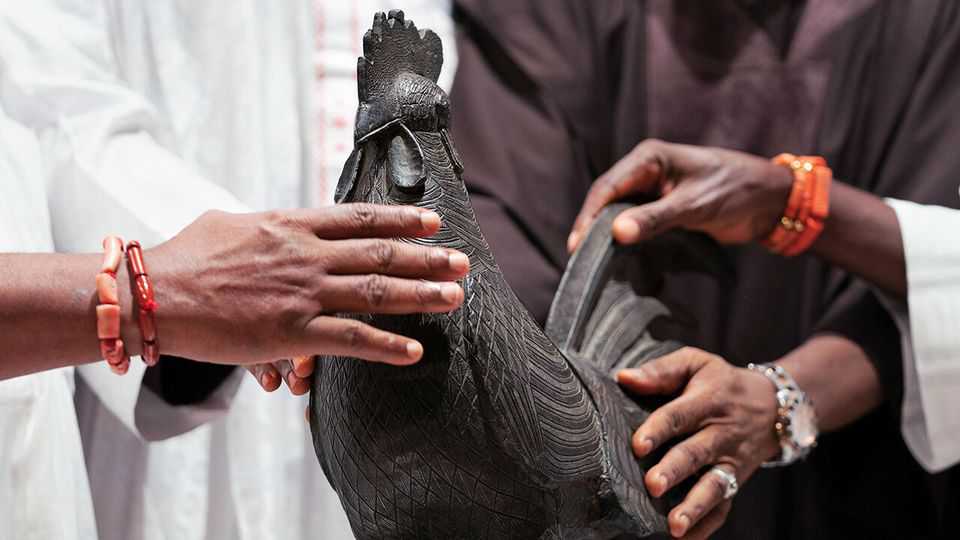
Behind thick earth walls a small team of Nigerians are archiving fragments of their country’s past. The Museum of West African Art (MOWAA), an exhibition space and research institute, was built on what was once the royal heart of the Benin empire. In 1897 Benin City, as the metropolis in southern Nigeria is now called, was razed by the British; 129 years later, MOWAA’s archaeologists and scientists are busy probing the earth below. Curators are preparing high-tech storage rooms for the sculptures, manuscripts and other wonders that MOWAA is waiting to receive.
Yet whether that will ever happen is up in the air. The multi-million-dollar museum was supposed to open to the public in late 2025. Instead, the inauguration has been postponed indefinitely because of a long-running dispute with Benin City’s traditional king, the oba. Though its archaeological work continues for now, MOWAA’s fate hangs in the balance.
Things came to a head in November, when protesters stormed a glitzy preview event for officials and foreign guests. The intruders, echoing the oba, demanded that the museum be suspended pending an “investigation” into its provenance, funding and legality, prompting an inquiry. But the dispute goes back further.
It begins with Benin’s famous bronzes, a stunning collection of plaques and statues looted by the British and bought by museums (and private collectors) across Europe and America. On February 8th the University of Cambridge became the latest institution to say it would return its collection of bronzes to Nigeria as part of a global drive for restitution. In 2018 Godwin Obaseki, then the governor of Edo state, which includes Benin City, announced plans for a new museum that could house them. That undercut the argument, made by opponents of returning the bronzes, that Nigeria has nowhere to keep them safe and on view for locals.
Yet not everyone was happy. In 2021 Ewuare II, the current oba, accused the team behind the project of attempting to hijack the restitution process. He was particularly exercised by the museum’s new name, which he believed severed the link between the bronzes and the palace. “It started as the Benin Royal Museum, not MOWAA—that is the foundation of the argument,” says his spokesman. In 2023 Muhammadu Buhari, then Nigeria’s president, declared the oba “the original owner and custodian of the culture, heritage and tradition of the people of Benin kingdom”. Any returning bronzes were to be handed to him rather than the government.
MOWAA’s leaders strenuously deny ever trying to exclude the palace. A trust established to oversee the museum included the crown prince. When that proved insufficient to placate the palace, the museum team decided to widen the project’s focus, says Phillip Ihenacho, the Nigerian financier who runs it. MOWAA would be just one museum among many, and it would not house the bronzes.
The argument may not be primarily about the bronzes. The oba has claimed that MOWAA’s leaders duped foreign donors into investing in a project they knew would never host the artefacts. The state government suggests Mr Obaseki abused his power by appointing his “business partners” to the project “without due consultation”. (Mr Obaseki and Mr Ihanecho, who are friends, deny any wrongdoing.)
The oba’s critics claim that he is really motivated by money. In October the new state governor partially revoked MOWAA’s land title. Some fear the next step might be to seize it and hand control to the oba. The royal palace, which lost its tax-raising powers under colonialism, is a scruffy shadow of its former self; goats bleat in the courtyard. A fancy museum could give it a useful new source of revenue.
Many locals would be fine with that. While the oba is revered, MOWAA is seen as an elite project that is “totally foreign to the everyday man in Benin”, says a local businessman. Nigeria’s federal government has set up a panel to broker a compromise that could save the museum. But it would not be the first such project to be undone by local politics. ■
Sign up to the Analysing Africa, a weekly newsletter that keeps you in the loop about the world’s youngest—and least understood—continent.