Finance & economics | Bringing the house down
Chinese homebuyers are enraged by shoddy building standards
Crooked walls and broken promises are harming China’s property market
February 12th 2026
When Steven Shi got the keys to his new $1m flat in northern Shanghai, in December, things were not quite right. The walls were crooked. The balcony’s tiles had not been installed properly. The power outlets did not have an electrical connection but the mirror in the bathroom did, delivering a shock when he touched it.
In January he and hundreds of neighbours banded together to insist that China Resources, a powerful state-owned real-estate developer, fix the most glaring problems. Some 200 angry homeowners gathered for hours outside a local government office, flanked by police. “I feel like I’ve been tricked,” says Mr Shi. He points out that the development was one of the most popular in Shanghai, which has perhaps China’s healthiest property market. “If it can happen here, it can happen anywhere.”
China does indeed have widespread, long-standing problems with expensive but shoddily built homes. A cap on the price developers could charge per square metre was put in place in 2016, prompting builders to cut corners. Two years later an executive at one of the country’s biggest developers described the homes then entering the market as some of the worst ever built. Then things got worse. In 2020 the central government restricted developers’ access to funding, triggering a crisis. Investment, construction, home sales and prices all collapsed. The funds raised by developers in 2025, including bond financing, were half those raised in 2021. Housing’s share of national fixed-asset investment shrivelled to 11%, from 19% in 2020.
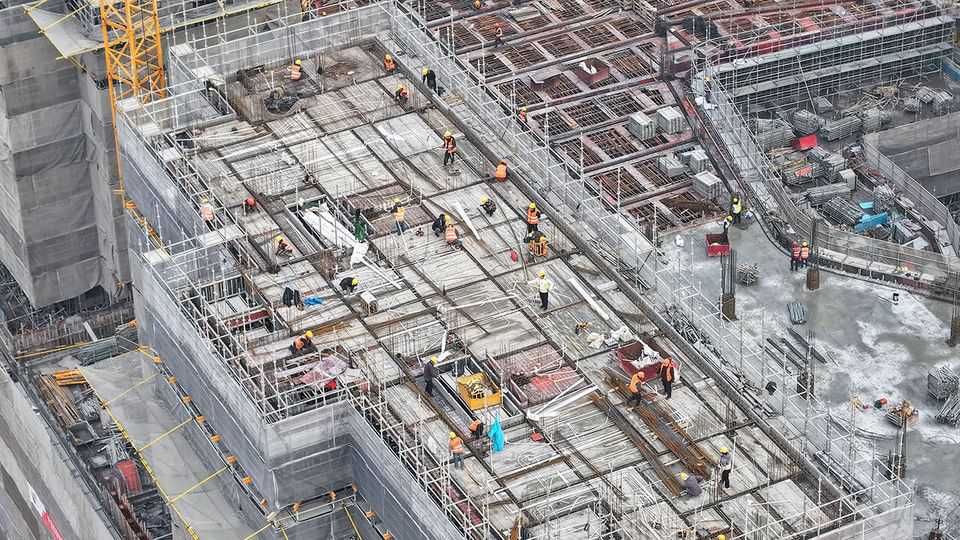
One result of the funding crisis has been that developers have been unable to finish building millions of homes for which buyers have already paid. Many of those companies that continue to build seem to have dramatically cut costs for materials, and to be employing fewer, less experienced workers. Meanwhile, local bureaucrats across the country have insisted to developers that they must hand over the keys to flats on time—imposing tight deadlines that make it even more tempting to cut corners. The officials’ fervour is understandable, since households making payments on homes they cannot live in can lead to social problems.
The scramble to finish homes with straitened budgets helps explain Mr Shi’s predicament: he feels like he has become an unpaid worker for China Resources, tasked with finishing their development project. The firm has acknowledged that not all its buildings are up to snuff, and has therefore given Mr Shi and many other families two years to request refurbishments to their units. After that, the company will shrug off any responsibility for carrying out such work. And so homeowners have had to hire third-party inspectors to investigate whether their homes have hidden problems. Mr Shi has so far identified 80 in his, and some of his neighbours need more than 200 things fixed.
Shoddy construction is not just a problem for disappointed homebuyers. It is also causing people to think twice about buying newly built flats at all, thereby reducing the prospects of a recovery in the housing market. There are no official statistics on complaints from buyers, but their dissatisfaction has become common knowledge. Chinese people therefore prefer to buy existing homes rather than those which might end up incomplete or badly built. Less than a quarter of sales last year were for new homes, down from half in 2022. One common refrain among second-hand homebuyers is that they want a flat built between 2005 and 2016. Any earlier and buildings appear dilapidated; any later and they will have been victims of the price cap, so possibly of lower quality.
The situation is a stark illustration of how policies set in Beijing can conflict with each other. The government last year removed the price cap and set out requirements for improving housing quality, such as standardising the height of ceilings. It has acknowledged that people are more likely to buy new homes that are in better shape. But the crackdown on borrowing by developers continues to undermine these goals. And local regulators seem unbothered by inferior work. Mr Shi says his district-housing regulator signed off on China Resources’ construction. This may have helped the developer meet its deadline.
For the time being, he and his wife would be satisfied just by being able to live in the home for which they are already making payments. Their goal is to move in by the end of the year. They have a lot of work to do. ■
For more expert analysis of the biggest stories in economics, finance and markets, sign up to Money Talks, our weekly subscriber-only newsletter.