China | The healing process
What’s the point of AI in acupuncture?
Traditional Chinese medicine meets modernity
February 12th 2026
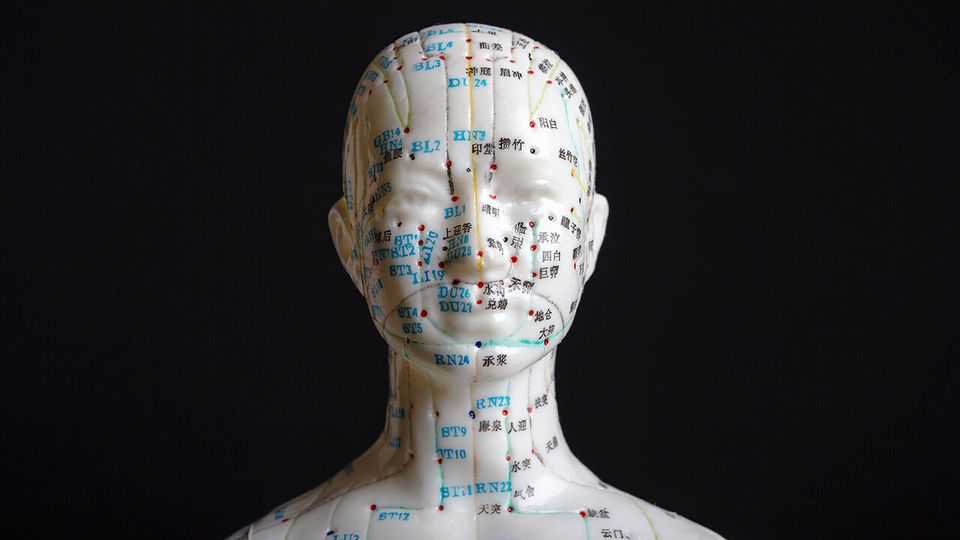
Acupuncture is a traditional medical practice in which needles are stuck into parts of the body. It once seemed more connected to China’s ancient past than to its high-tech present. No longer. On February 4th a company from Tianjin, a city in northern China, said it had developed a glove-like gadget, controlled by the user’s brainwaves, which can perform acupuncture on their hands. The company says the product, which is intended to help in the recovery of stroke victims, is undergoing clinical trials at hospitals in the city.
Such gizmos are part of a wave of efforts by Chinese companies and officials to meld traditional medicine (known as TCM) with new technology. Last month the government released a new five-year plan for the TCM pharmaceutical industry calling for digitised “smart factories” to produce TCM concoctions, more R&D to develop substitutes for rare ingredients and the use of artificial intelligence (AI) to discover new treatments. TCM, the plan said, is “a jewel of Chinese civilization”, and as such should be “modernised”.
At first glance TCM is an unlikely thing to drag into the modern world. Some of its teachings have scientific backing: a compound in a herb known as qinghao is an effective treatment for malaria; much advice doled out by TCM doctors boils down to eating healthily. But many TCM medicines and treatments are probably no better for your health than a placebo. And a few TCM brews are downright harmful—if not to the patient, then certainly to the bears, snakes and other animals that are killed to provide their ingredients.
Nevertheless, TCM is booming in China. The Communist Party supports the industry as a source of national pride. And many see it as a way to stay healthy, with conventional medicine (known locally as “Western medicine”) seen as more suitable for treating serious illness. They also value TCM’s philosophical underpinnings, which emphasise a holistic approach to health that does not sharply distinguish between food and medicine. Nearly 90% of Chinese public hospitals have TCM clinics. Some 700,000 TCM practitioners operate in the country, receiving over 1bn visits from patients every year.
Such a big industry may be ripe for disruption. TCM clinics still feel old-fashioned, with their herb-scented, wood-panelled rooms filled with exotic ingredients, such as wrinkled sea cucumbers, slices of deer antlers and dried orchids. But technology is creeping in. Some clinics have sensors which can detect the speed, strength and rhythm of a pulse (an essential element to a TCM health diagnosis) and interpret the results. AI chatbots are helping TCM doctors choose the right concotions to offer (however weak the evidence of their efficacy). A mini-program on WeChat, a messaging app, offers dietary advice based on TCM to users who upload a picture of their tongue.
Making TCM increasingly high-tech could make sense for some clinics. It is cheaper to use a machine than to train a TCM doctor. It may also benefit the environment: officials hope that modernising the production of TCM medicines will make the use of ingredients more efficient and so lessen the impact on ecosystems. But building up trust will be a long process. Many of the Chinese who rely on TCM do not want to be treated by a robot. Some parts of TCM treatments, such as massages, need the “human touch”, says an employee of a clinic in Beijing.
One challenge is that TCM knowledge is scattered across thousands of ancient books (and in the brains of doctors who might prefer to keep their techniques a secret). As a result, two TCM doctors who were trained in different schools might have completely different judgments of a patient’s condition and how to treat it, explains one Beijing-based software engineer who is building AI models for use in TCM clinics. But teams like his are collecting data to train their models. At the moment, AI-powered diagnoses have reached the level of an “average” TCM doctor, he says. But that may not be saying much given the lack of high-quality trials to support TCM treatments.
Adherents hope that technology will make TCM increasingly objective and standardised. But that is unlikely without more trials—no amount of algorithmic refinement can serve as a substitute for them. Without the evidence base that Western medicine relies on, TCM modernisation will be mostly a high-tech mirage. ■
Subscribers can sign up to Drum Tower, our new weekly newsletter, to understand what the world makes of China—and what China makes of the world.