Asia | Digital money
Asia is turning stablecoins into banking infrastructure
Speculative crypto may be tottering, but stable tokens are finding their feet across the region
February 12th 2026
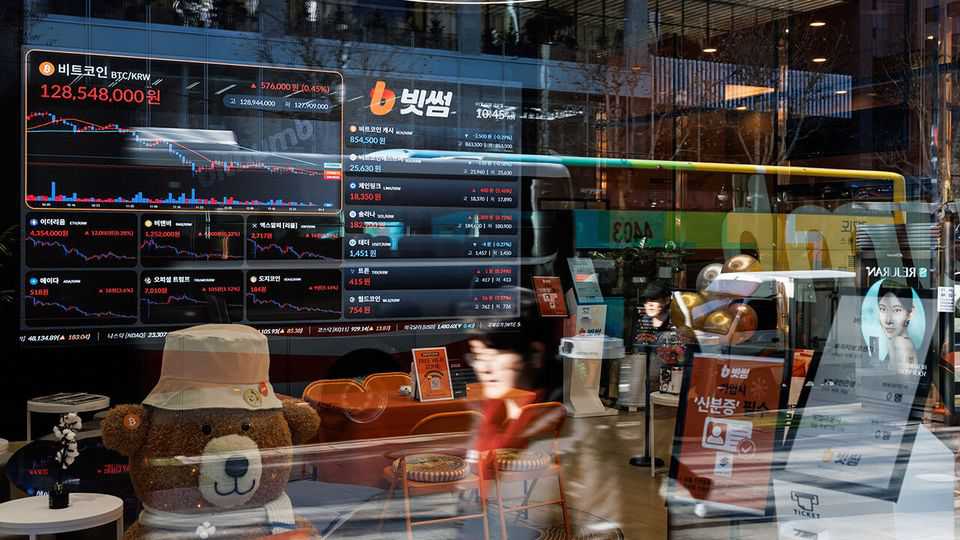
For a freelance software developer in Lahore or a nanny from Manila, smartphones are now crypto banks. Instead of losing the equivalent of as much as a day’s pay to wire-transfer fees, their owners can instantly send and receive stablecoins (digital tokens, generally pegged to the dollar) and at low cost.
Such experiences explain why, despite official wariness, crypto is flourishing across Asia—even in places like India, which has among the world’s strictest cryptocurrency policies, taxing gains at 30% and deducting a whopping 1% from transactions. India was home to an estimated $338bn in crypto inflows between the middle of 2024 and 2025, ranking it first in the world for the third year in a row on an index measuring global cryptocurrency adoption by Chainalysis, a data firm.
Nine of the top 20 countries in the Chainalysis index are Asian, including Pakistan (3rd) and Vietnam, as well as richer countries like Japan and South Korea. Trading for profit is still popular, but the region’s dominance mainly reflects a shift in how crypto is used: not just as a speculative plaything (currently looking increasingly risky) but also as a new form of financial infrastructure. “Crypto is being used to solve real-world problems,” says Chengyi Ong of Chainalysis.
Remittances are a key application. Around 24m people from South-East Asia work abroad. The average cost of sending $200 home was 6.5% in 2025, according to the World Bank. This is a painful problem for diaspora workers hoping to send money to countries such as the Philippines, where remittances are 9% of GDP. One solution is stablecoins. Unlike bitcoin, their price barely fluctuates. Stablecoins are “becoming the backbone of crypto activity”, says Ms Ong.
Between January and July last year, global stablecoin transfer volumes topped $4trn. That is still a tiny fraction of the payments that cross borders each year; but while volatile assets like bitcoin make the global headlines, stablecoins are quietly starting to do the work of actual payments.
Their advantages are prompting businesses to adopt stablecoins, too. Each bank involved in traditional cross-border payments adds fees, delays, mark-ups and compliance checks. A Vietnamese firm paying a Thai supplier typically needs correspondent banks for currency conversion; stablecoin transactions settle faster with fewer intermediaries. Monthly business-to-business stablecoin volumes have surged from under $100m at the start of 2023 to over $6bn by mid-2025, according to Artemis, a crypto analytics firm.
Asia’s large freelance workforce is also bypassing traditional banking. According to the World Bank, the region has more than 210m gig-economy workers, roughly half of the global total. Conventional payment systems often delay payouts to drivers and delivery workers; stablecoins enable instant settlement. Visa is testing a system that sends payments directly to recipients’ stablecoin wallets. Pakistan, with around 2m freelances and $38bn in remittances each year, has many workers who opt to receive payments in stablecoins, which can easily be converted to local currency, through exchanges or local traders, typically for a fee of 1-3%, roughly half what traditional channels cost.
Whether stablecoins become financial infrastructure or tools for fraud will depend largely on Asia. The same features that appeal to a Filipino nurse sending money home—speed, low fees, no bank account required—also service criminal syndicates operating in Myanmar and Cambodia. The region has the scale, need and regulatory ambition to resolve that tension. If it does, stablecoins could reshape how money moves across borders. If not, crypto will have found its long-sought use case—just not a legitimate one. ■