Science & technology | Well informed
Does being induced lead to a medicalised birth?
It might actually prevent it
February 12th 2026
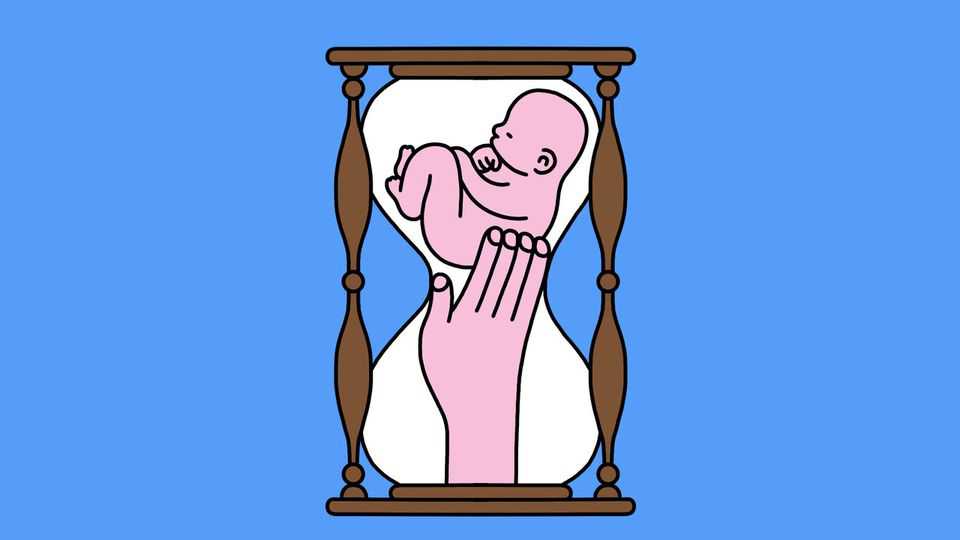
THE TEXTBOOKS are clear: in humans, pregnancy lasts an average of 40 weeks. But averages are just that. Many women find themselves at the end of that period without any sign of contractions. In those cases doctors or midwives will usually suggest that, rather than wait for nature to take its course, labour should be medically induced.
Should those women agree? Some organisations promoting newborns’ and mothers’ health, such as the Thompson Method in Australia and National Partnership in America, as well as online influencers, argue that induction is likely to set off a cascade of other medical interventions, including epidural blocks for pain relief, forceps deliveries or perhaps even a Caesarean section—a major operation. The best evidence, however, suggests they have no reason to worry.
Hospitals offer induction because the risk of stillbirth or infant death (both of which are thankfully rare) goes up in pregnancies that continue beyond 41 weeks. The first stage is a “membrane sweep”, in which a midwife or doctor runs their fingers around the cervix to separate it from the baby’s amniotic sac. If labour still does not start, a small balloon can be inserted into the cervix to help it dilate, hormones can be given to start contractions, or the waters may be broken with a long hook.
For bigger interventions—say, an epidural for pain relief, or delivery via forceps, ventouse or Caesarean—the link to induction is not as clear. Some observational studies, which look at what happens to women who are induced versus those who are not, have found induction makes those interventions more likely. But drawing robust conclusions from such work can be tricky.
There may be important differences between the two groups of women that could make the first more likely to need induction as well as the other interventions. Tellingly, the association with Caesareans tends to go away if researchers compare women who were induced with those told to go home and wait (thus excluding women who went into labour on their own and, therefore, would not have needed an induction).
That picture is backed up by randomised controlled trials (RCTs), the gold standard for evaluating medical interventions. Take the American ARRIVE trial from 2018. It randomly assigned around 3,000 low-risk, first-time mothers to have an induction at 39 weeks, and another 3,000 or so to “wait and watch”. It actually found that 22% in the “waiting” group had a Caesarean compared with 19% of the induction group—a modest but significant difference.
These results may not be universally applicable, but other RCTs have reached similar conclusions. A review from 2020 which pooled data from 34 RCTs from around the world found that being offered induction, usually after 41 weeks, slightly lowered C-section rates, without significantly increasing the rate of instrumental delivery or the use of epidurals. In other words: induction does not seem to lead to more interventions, and might even do the opposite.
The law of averages, of course, still applies: there is no guarantee that expectant mothers will avoid unwanted interventions after an induction. How individual hospitals manage the process will probably have an impact, as will how much pressure the mother feels to have an induction when she would rather wait. Of all the reasons why any given woman might decide it is not for her, concerns about an automatic “cascade” need not be one of them.■
After a free, evidence-based guide to health and wellness? Sign up to our weekly Well Informed newsletter.