Britain | Unintended consequences
Britain’s “Hillsborough law”, pledging candour, is avoiding it
A bill to jail dishonest bureaucrats may result in a less honest state
February 12th 2026
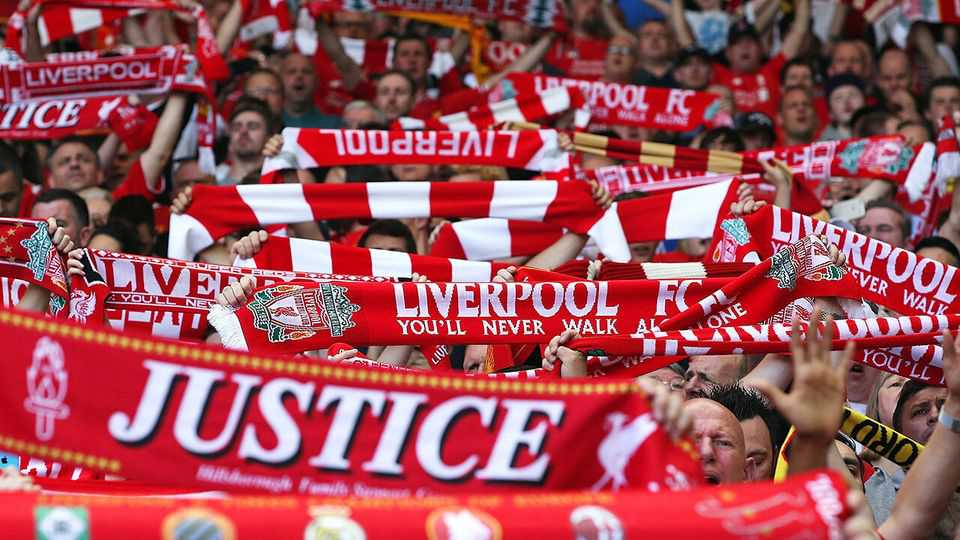
When Sir Keir Starmer writes his memoirs (and the day can’t be far off now) one achievement will, he hopes, stand tall amid the rubble. The “Hillsborough law”, he told Parliament on November 3rd, will be remembered as “one of the great acts of this Labour government”. Its goal is audacious: nothing less than to make it a crime for the state to lie. For a prime minister who believed he could mend Britons’ shattered faith in their governments, it would be a fitting legacy.
The Public Office (Accountability) Bill, its formal name, is the fruit of a long campaign by bereaved relatives of the football disaster of 1989, whose events permeate it. Grossly negligent police commanders oversaw a stadium crush that killed 97 people. In a vast cover-up, they changed witness statements and falsely briefed the press that the fans were to blame.
Under the bill, every public servant, from paramedics to the prime minister, will be bound by a “duty of candour”. So will businesses that carry out state functions. Failing to act with “candour, transparency and frankness” before inquiries will carry a prison sentence of up to two years. So will a new offence of intentionally or recklessly “misleading the public”, which the government says could include “a cover-up by a government department about the harmful consequences of a policy”.
No one could fault the intention. The pity is the bill is unlikely to live up to it. The spectre of individual criminal liability for low-ranking bureaucrats is unlikely to produce a more candid state; it could create a more opaque, evasive and sclerotic one. Sir Keir is more prone to performative policymaking than he likes to pretend.
Already trade-offs are becoming clear. After unveiling the bill, and seeing it through most of its stages in the House of Commons, ministers have paused it, in response to concerns in Whitehall that it will frustrate the work of the intelligence agencies, which are partially covered by the “duty of candour”. Campaigners insist they will tolerate no dilution.
But the problems run far deeper than the spooks. Ministers know this, because in preparing the bill they ordered a review of a “duty of candour” introduced to the National Health Service for medical errors (albeit without individual criminal liability) in 2014. It showed how, when bureaucracies are hit with edicts for transparency, they respond with paperwork and legalism. The duty has “become a tick-box exercise, with staff and providers going through the motions”, the review was told. “It can be a whole industry in itself trying to monitor and ensure compliance,” one medic reported. Complying, said others, felt like “declaring their own guilt”.
The trouble with the bill, says one sceptical minister, is that politicians do not understand the signals legislation can send to the machine. Officials may have a perverse incentive to remain “strategically uninformed” about brewing problems if they face a criminal liability for failing to act with candour about them in the future, says Andrew Dean, a former government lawyer now a partner at Bird & Bird, a law firm. “If you don’t know something, you can’t be required to disclose it,” he says.
Decision-making by committee may also result, Mr Dean adds: with an eye on a court case years in the future, best make sure the entire public body rather than an individual has their name on the dotted line. And since it will be an offence to mislead the public, government officials may choose to say less rather than more. He gives the example of a pandemic: if an official prepares a briefing that a disease is low-risk and it later proves to be deadly, whether that call was reckless could be later scrutinised in court. “The safer course for the individual would be to say nothing, or to give extremely equivocal advice, until certainty is achieved.”
Ministers complain that the civil service is bogged in a “sludge” of slow decision-making. But officials will have an incentive to take more detailed minutes, keep more records and give risk-assessments even lengthier consideration to insure against future court challenges in which the reliability of their memories will be at stake. Companies will scrutinise their government contracts much more carefully, since they too bear a risk, says Simon Belfield of DWF, another law firm.
The campaigners are right that the British state is secretive. But candour cannot be ordered by an act of Parliament. It is a symptom of a healthy institution. It means thinking deeply about leadership, management, culture and training. The bill might succeed if it were coupled to such an agenda; Sir Keir does not have one.
It is not the job of the Hillsborough campaigners to worry about the unintended consequences of their bill; Whitehall failed them for years and they owe it nothing. It is the job of Parliament. Yet no Labour MP will contradict the Hillsborough-law campaign: it was a manifesto pledge. Many still see themselves as outsiders rather than part of a government—critics of the state rather than its stewards.
The result is an unfortunate irony. Legislation that promises a more honest state has been met with an evasive debate. The government has made impossible promises—that the legislation “will once and for all end the culture of cover-ups and hiding the truth”—that would surely fall foul of the offence of misleading the public. If candour is the order of the day, start with this: this bill is unlikely to work. ■
For more expert analysis of the biggest stories in Britain, sign up to Blighty, our weekly subscriber-only newsletter.