The Americas | No off-ramp
Central America’s biggest city is eternally snarled with traffic
Where congestion brings smog, delays and lost productivity
February 12th 2026
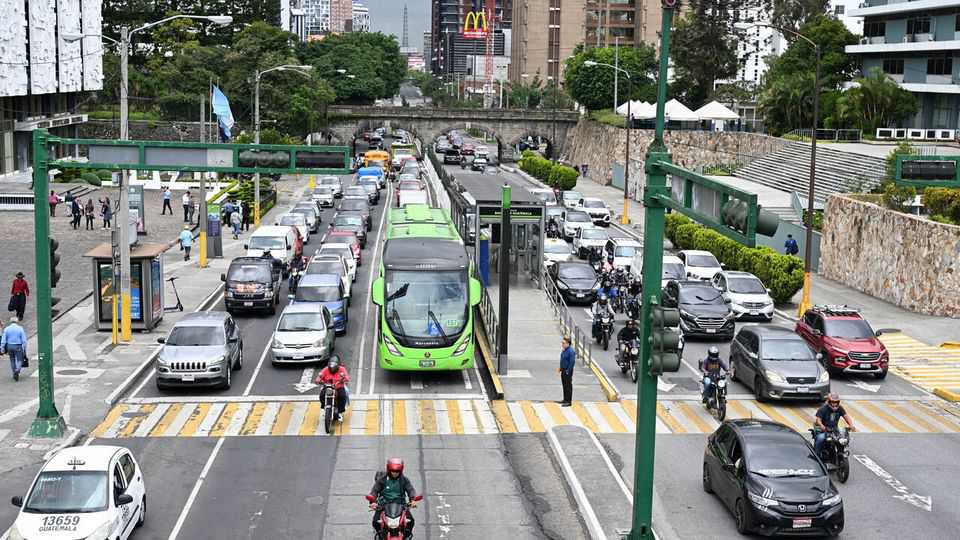
“Here, every hour is like rush hour,” says Abelino, a taxi driver. He is crawling along the ring road of Guatemala City, known to locals as “Guate”, at 11:30pm on a Saturday. A 30km descent from the highlands can take four hours. Google Maps paints every road into the city in the dark-red hue that marks the worst congestion.
The number of vehicles in Guatemala has risen from 3.2m to 6.2m in the past ten years. Many are in the capital, where little has been done to improve infrastructure. It is telling that the superintendent of Guate’s municipal traffic police is followed by 800,000 people—a third of the city’s adults—on social media, all keen to get any edge to beat the jams. Many vehicles are old, such as the gas-guzzling “chicken buses”—repurposed American school coaches. Guate’s emissions per commuter are the worst in Central America and third-worst in the world.
Congestion is costing Guatemala dearly. A recent study by the Observatory for Cities, an initiative from the University of the Isthmus in Panama, suggests that Guatemalans lose 1,300 Quetzals ($170) a month due to congestion, more than a fifth of an average salary, because of lost productivity. The same outfit reckons that this costs the country some $4bn annually.
Oliver, who works on a coffee plantation on the shores of Lake Atitlán, 170km away, says traffic is one reason why rural Guatemalans are cut off from services like hospitals. The fact that only 40% of the country’s rural roads are paved makes matters worse.
The importance of unclogging the jams is filtering onto the government’s agenda. In September it published a “mobility plan” for the capital region, proposing new highways and an integrated public-transport system, while also encouraging cycling and remote working. In January the government signed a deal with the United States, committing to spend $110m on road-building, an increase worth 5% of the entire infrastructure budget. The deal includes technical advice from the United States Army Corps of Engineers.
But road-building in Guatemala has a long history of corruption. Projects risk being snarled up by the graft that President Bernardo Arévalo has pledged to root out. A longstanding project to build a new ring road around the capital has been stalled for years. Perhaps American backing can help. Until then, Guate’s drivers will stay in a jam. ■
Sign up to El Boletín, our subscriber-only newsletter on Latin America, to understand the forces shaping a fascinating and complex region.